Grafana Loki is a log aggregation system designed for efficient, cost-effective storage and querying of logs, especially in cloud-native environments like Kubernetes.
It’s part of the Grafana Labs ecosystem and is often used alongside Prometheus and Grafana.
⚙️ Core Idea (What Makes Loki Different)
Unlike traditional log systems (e.g., Elasticsearch-based stacks), Loki:
- Does NOT fully index log contents
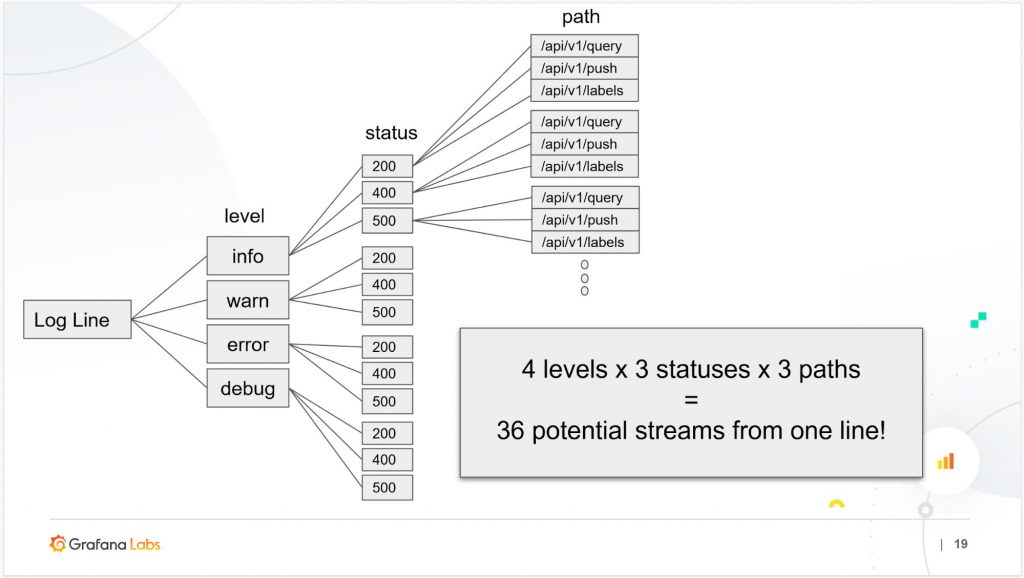
- Instead, it indexes only metadata (labels)
Why that matters:
- 🔽 Lower storage costs
- ⚡ Faster ingestion
- 🧠 Encourages structured labeling instead of heavy parsing
Think of it as:
“Prometheus for logs”
🧱 Architecture Overview
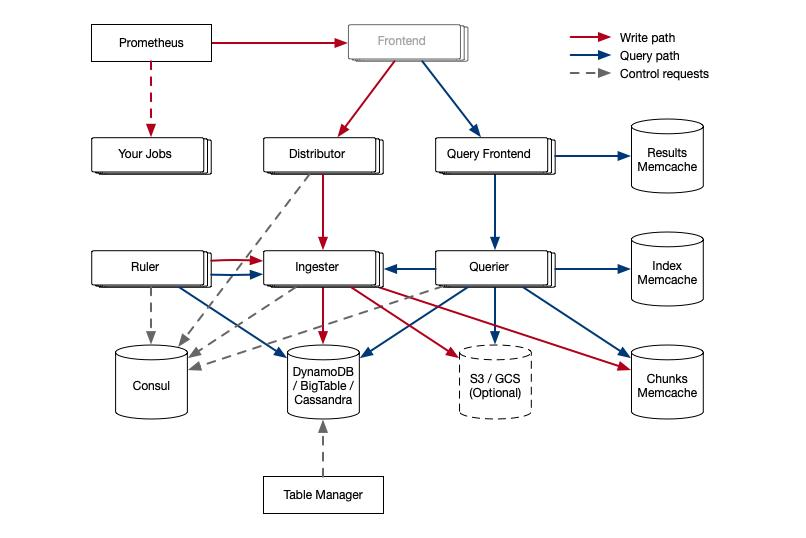
Loki is built around a few key components:
- Distributor – Receives log data and distributes it
- Ingester – Buffers logs in memory and writes them to storage
- Querier – Handles log queries
- Query Frontend – Optimizes and parallelizes queries
- Storage Backend – Object storage like S3, GCS, or filesystem
Logs are stored in chunks, indexed by labels such as:
{app="api", env="prod", region="eu-west-1"}🔍 Querying with LogQL
Loki uses LogQL, a query language similar to PromQL.
Example:
{app="nginx"} |= "error"This means:
- Select logs where
app=nginx - Filter lines containing
"error"
You can also:
- Extract fields
- Aggregate logs into metrics
- Build alerts
🔗 Integration Ecosystem
Loki works best when paired with:
- Promtail – Collects and ships logs to Loki
- Grafana – Explore and visualize logs
- Prometheus – Metrics
- Tempo – Traces
Together, they form a full observability stack.
🚀 Typical Use Cases
- Kubernetes log aggregation
- Microservices debugging
- Infrastructure monitoring
- Correlating logs with metrics and traces
⚖️ Pros vs Limitations
✅ Pros
- Cost-efficient at scale
- Simple architecture
- Tight Grafana integration
- Great for Kubernetes environments
⚠️ Limitations
- Slower full-text search vs Elasticsearch
- Requires good label design (critical!)
- Not ideal for highly unstructured log exploration
🧠 When Should You Use Loki?
Use Loki if:
- You’re already using Grafana/Prometheus
- You want cheap, scalable log storage
- Your logs can be well-labeled
Avoid Loki if:
- You need deep full-text search across logs
- You rely heavily on ad-hoc log exploration without structure